

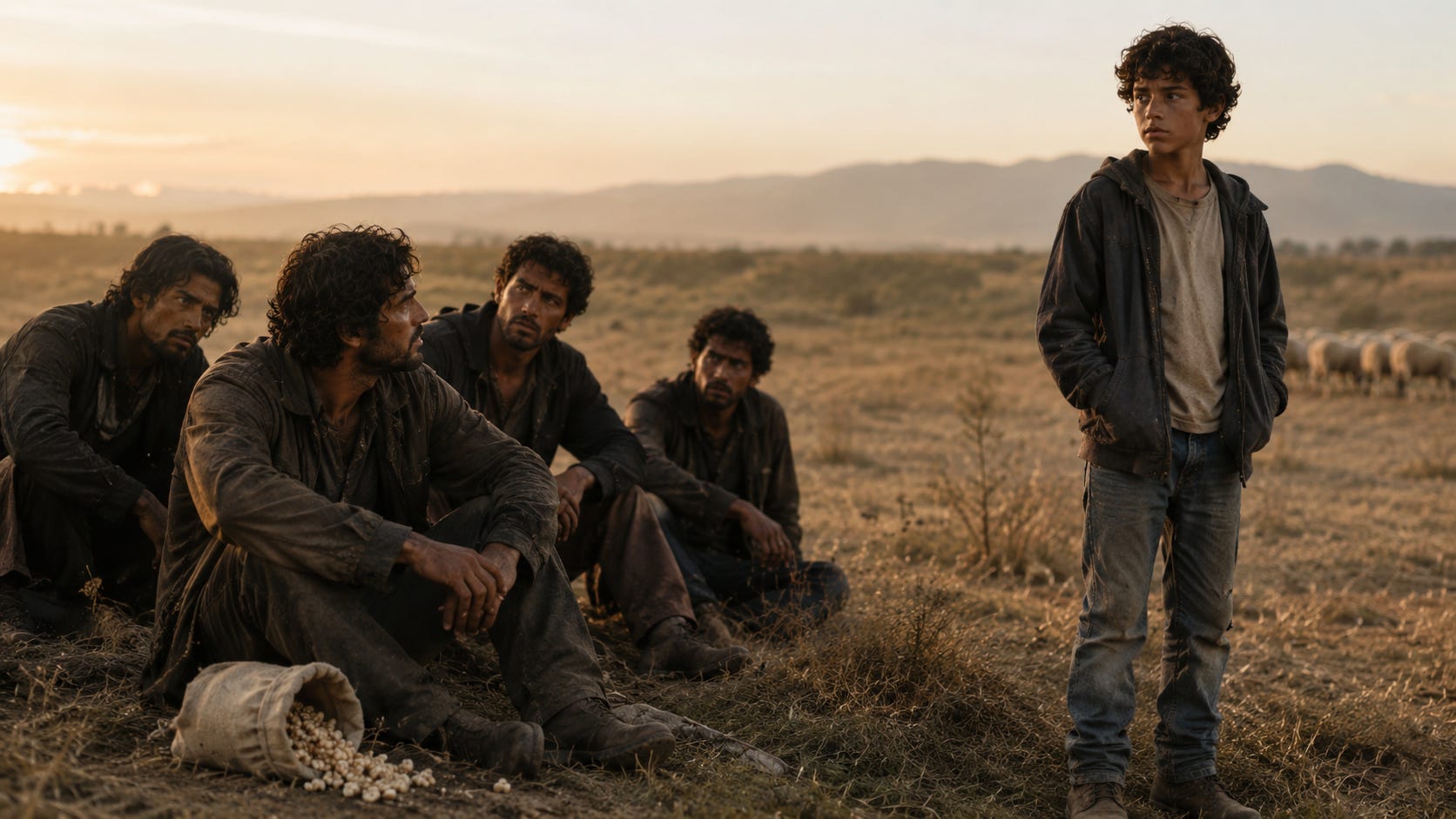
Sometimes knowing the full story makes it harder to appreciate the smaller details along the way.
When we think of Joseph, we tend to jump ahead.
We remember the pit, the prison, and Egypt. We remember how God preserved him through years of suffering, raised him to a position of influence, and eventually used him to save his family from famine.
But Joseph’s brothers did not know any of that when the story began.
All they knew was the younger brother standing in front of them.
Genesis 37 tells us that Joseph reported to his father some of the bad things his brothers were doing. Then we learn that Jacob loved Joseph more than his other sons and gave him a special robe. His brothers saw the favouritism, resented Joseph, and eventually hated him so much that they could not speak kindly to him.
From their perspective, Joseph may have seemed like little more than an irritating, favoured tattletale.
They could not see that this annoying younger brother would one day be the person God used to save their lives.
That makes me think of James.
James begins his letter by calling himself “a slave of God and of the Lord Jesus Christ” (James 1:1).
But James was also Jesus’ brother.
The bible tells us that during Jesus’ ministry, his brothers did not believe in him. I sometimes imagine what it might have been like growing up beside Jesus. Perhaps James heard some version of, “Why can’t you be more like your brother?”
As a young man, that might have been the most irritating comparison imaginable.
Years later, however, James had come to understand who Jesus truly was. Being more like Jesus was no longer an annoying expectation. It had become the direction of his entire life.
The person who frustrates us today may eventually become part of God’s provision for us.
The circumstance we despise may become the very place where God forms us, redirects us, or prepares something we cannot yet see.
That does not mean the frustration you are experiencing today isn’t important. It does not excuse harmful behaviour or ask us to pretend that difficult things do not hurt.
But it does invite us to take a step back.
You do not yet know the whole story.
The person who irritates you may not always occupy the same place in your life. The circumstance you resent may not end the way you fear it will. What feels like an obstacle today may become part of the road God uses to bring healing, growth, or unexpected provision tomorrow.
Joseph’s brothers saw an annoying younger brother.
They could not yet see their rescuer.
Maybe the part of your story you despise today will look very different once you can see what God was doing through it.